Behind Substance Use and Opioid Overdose: The Social Determinants at Play
February 20, 2026
Written by Phil De Vera, CHSU-COM OMS-II & OPC Internal Education Sub-Chair
Social determinants, such as housing stability, income, education, and community environment, play a significant role in influencing someone’s vulnerability to substance use and overdose. As future physicians, medical training often focuses on diagnosis, treatment, and management, which are essential components of patient care. However, the social factors that predispose individuals to select medical conditions are often omitted from traditional clinical discussions. Recognizing and addressing these underlying determinants is vital to delivering comprehensive, patient-centered care, particularly in the context of substance use and overdose, where social context often drives both risk and recovery.
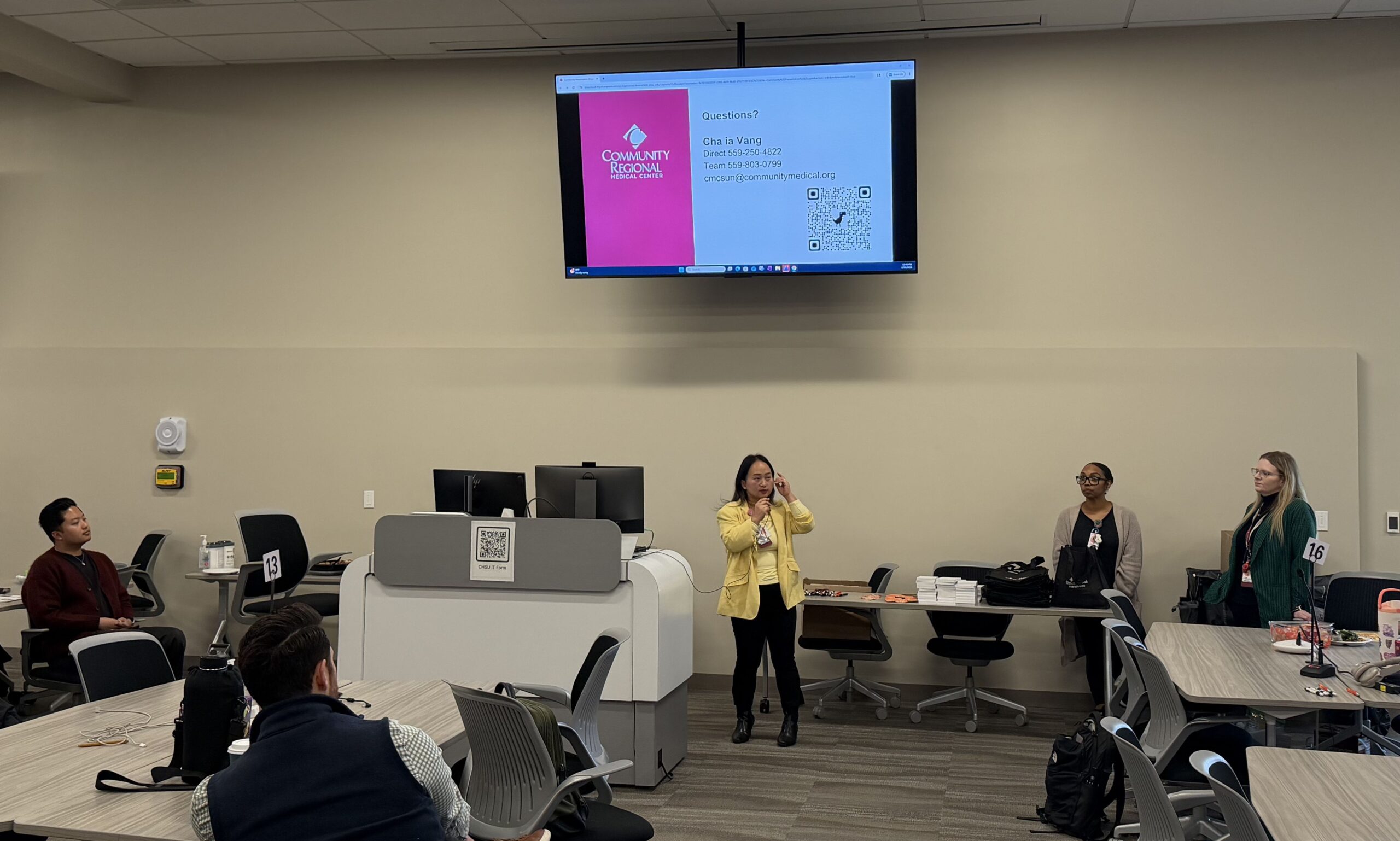
In an effort to open these conversations among future physicians, the California Health Sciences University College of Osteopathic Medicine (CHSU-COM) Overdose Prevention Committee (OPC) welcomed Chaia Vang and her team to discuss the social determinants that underlie substance use and overdose, with an emphasis on their impact within the Central Valley. Chaia Vang is a Substance Use Navigator at Community Regional Medical Center and a Navigator Engagement Coordinator with CA Bridge. She is also part of the first cohort of Social Medicine Fellows in the Community HEAL Fellowship at UCSF.
Chaia began the conversation by discussing the Opioid Epidemic, sharing statistics and demographic information from the California Overdose Surveillance Dashboard. Specifically, she highlighted both nationwide and Fresno County data. She also addressed the “Emoji Drug Code,” which has emerged as a new form of communication between drug buyers and suppliers to notify one another of which drugs are available for purchase and their potency. This new medium of communication showcases how many individuals, especially the youth, are discreetly consuming drugs and highlights that signs of substance abuse may be easily missed.
After she provided an overview, she delved deeper into news articles about overdose events in Fresno County, culminating in the screening of the trailer for Killer High: The Silent Crisis. This documentary explores the fentanyl crisis in the Central Valley through the eyes of the families impacted by it. Many students expressed how deeply affected they were after hearing these stories. One student shared, “Hearing about these incidents that occurred in the area truly underscores how important these conversations are as future physicians being trained in the Central Valley.”
The rest of the discussion focused on Chaia and her team’s experiences as Substance Use Navigators and the various social determinants that they have encountered with the patients they serve. The CHSU-COM OPC extends its sincere gratitude to Chaia Vang and her team for launching these critical discussions with the over 20 medical students in attendance at CHSU-COM.