From Awareness to Action: Transforming Bystanders into Overdose Responders at Fresno State Chris Herren’s “The First Day” Event
March 4, 2026
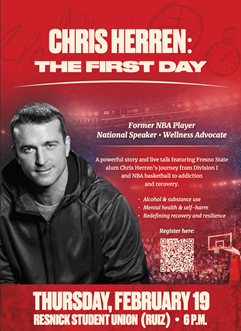
On Thursday, February 19th, California Health Sciences University’s Overdose Prevention Committee (OPC) was invited to table and engage with students and staff at Fresno State during the “Chris Herren: The First Day” speaker event held at the Resnick Student Union. Chris Herren formerly played basketball for the NBA Nuggets, Boston Celtics, and Fresno State. He is now a national speaker whose story traces a trajectory from elite athletic success to substance use disorder and long-term recovery.
A “McDonald’s All American” and Division I athlete, who went on to play professionally in the NBA, Herren has since dedicated his life to substance use prevention education, speaking candidly about the realities of addiction, overdose, and recovery. His platform centers on early decision making, the risks of experimentation, and the long-term consequences of substance use. After his courageous recovery he and his wife opened Herren Wellness with two locations serving as recovery and rehabilitation centers.
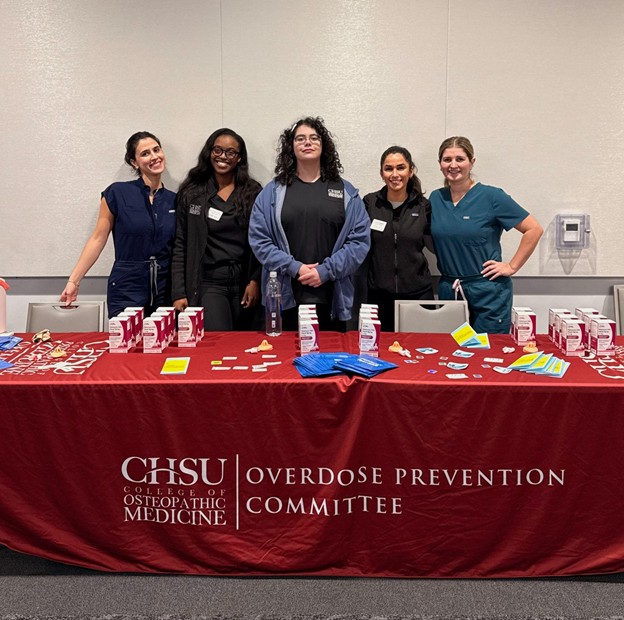
OPC was present inside the Resnick Student Union ballroom to distribute intranasal naloxone (Narcan), fentanyl testing strips, and educational pamphlets. Fresno State currently provides free on‑campus harm‑reduction resources through a vending machine where students can use their ID to access naloxone (Narcan), fentanyl testing strips, and other wellness supplies.
OPC currently engages with Fresno State students to ensure they are equipped with the knowledge and confidence to properly utilize these lifesaving tools, particularly naloxone (Narcan), and this event further strengthened OPC’s presence on campus. Throughout the evening, students approached the table curious and eager to learn. Many arrived familiar with the name naloxone (Narcan), but most were unsure of the specific signs of an opioid overdose, how naloxone (Narcan) works, or what to do after administering it. Each interaction became an opportunity for education, stigma reduction, and empowerment. Students left not only with supplies in hand, but with a clearer understanding of overdose recognition, response protocol, and the importance of preparedness.
As over 500 students and staff filled the ballroom, the energy was initially light and anticipatory as they awaited former NBA player Chris Herren. When Herren began speaking, a noticeable shift occurred in the room. A sense of seriousness and respect replaced the earlier excitement. He shared his journey from being one of the top high school basketball players in the country to playing Division I basketball and eventually in the NBA, only to lose it all to addiction. What began with alcohol progressed to cocaine, oxycodone (Oxycontin), and eventually heroin. He emphasized that there is no safe amount of experimentation and reflected on how early decisions and a casual attitude toward substance use ultimately cost him his career and nearly his life. Herren openly recounted multiple overdoses and the long, difficult road to recovery, leaving the audience deeply impacted.
After the speaker concluded, engagement dramatically increased. Prior to the event, many students expressed hesitation to accept intranasal naloxone (Narcan) because of how they could be perceived. By the end of the evening, OPC had trained over 40 people and distributed more than 30 boxes of intranasal naloxone (Narcan). The weight of Herren’s story reinforced a powerful message that substance use is never to be taken lightly and that overdose can happen to anyone. After learning about its lifesaving potential, particularly in cases of accidental overdose, students recognized the importance and impact of being prepared. By equipping the community with practical training, destigmatizing conversations around addiction, and instilling confidence in overdose response, OPC continues to strengthen campus safety.