Medication Assisted Treatment in Practice, Caring for Underserved Populations in the Central Valley
April 10, 2026
Written by Phil De Vera – CHSU-COM OMS-II, OPC Internal Education Sub-Chair
Throughout California, many nonprofit organizations provide accessible care to individuals who inject drugs, helping to reduce the transmission of communicable diseases and promote preventive health services. In the Central Valley, a medically underserved region, one such organization is the San Joaquin Valley (SJV) Free Medical Clinic & Needle Exchange, where many California Health Sciences University College of Osteopathic Medicine (CHSU-COM) students volunteer their time.
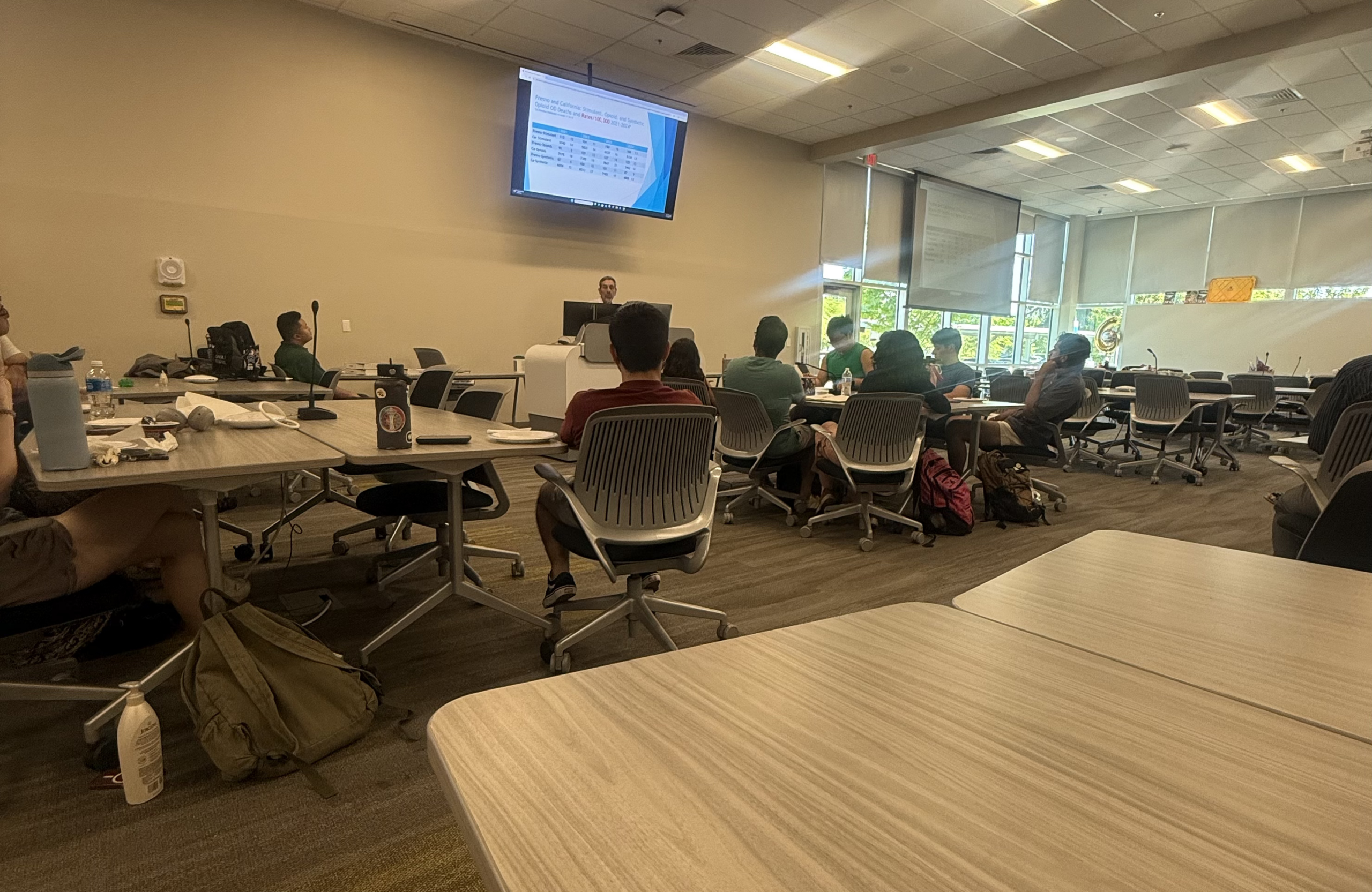
John Zweifler, MD, MPH, oversees the SJV Free Medical Clinic & Needle Exchange alongside Marc Lasher, DO. The CHSU‑COM Overdose Prevention Committee (OPC) invited him to share insights into the clinic’s mission and his work providing medication‑assisted treatment (MAT)—an evidence‑based, whole‑person approach to treating a range of substance use disorders—to individuals in the community. Dr. Zweifler is a board‑certified family medicine physician with over 30 years of experience in medical leadership, education, and clinical practice, with a focus on caring for rural and underserved populations.
Dr. Zweifler began his presentation by highlighting key statistical data on substance use in the Central Valley to underscore the significance of his work in the region. He reviewed essential terminology related to opioid and substance use, emphasizing the importance of accurate, patient‑centered language when discussing experiences such as withdrawal, dependence, and addiction. He then introduced screening tools used to assess opioid use and guide appropriate next steps in care, including referral to residential detoxification when indicated. Dr. Zweifler also shared insights into the ways medical students can support basic screening efforts and engage meaningfully with patients during their clinical rotations.
In the second half of his presentation, Dr. Zweifler reviewed the treatment options available for opioid use disorder, including MAT. He discussed several treatment regimens, outlining the benefits and limitations of each approach. Beyond clinical treatment strategies, he emphasized the importance of harm reduction services and the need to expand access to MAT in underserved communities, particularly in the Central Valley. Dr. Zweifler also highlighted his advocacy and grant‑writing efforts, which help sustain the low‑barrier MAT and comprehensive services offered through the SJV Free Medical Clinic & Needle Exchange. These initiatives have enabled the clinic to serve some of the region’s most vulnerable populations while connecting patients with Community Health Workers who address critical social determinants of health.
The CHSU-COM OPC extends its gratitude to Dr. Zweifler for sharing his expertise and educating the 30+ medical students in attendance on the impact of MAT and the importance of expanding access to this essential form of care in the Central Valley.