Equipping the Next Generation to Respond When it Matters Most
August 3, 2026
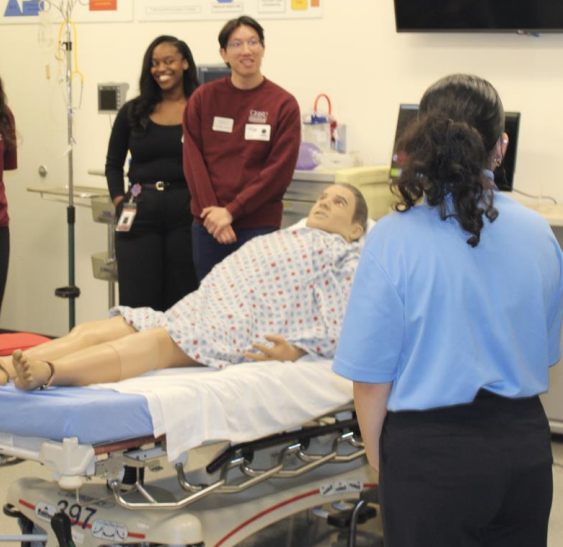
Photo Caption: Bomi Adekoya, OMS-II, OPC Chair, and Theodore Do, OMS-II, Academic Outreach Sub-Chair (pictured left to right), engage students in the simulation center through a discussion on cardiac
resuscitation and emergency response.
Written by Oluwabomi (“Bomi”) Adekoya, CHSU-COM Student & OPC Chair
On Wednesday, July 8, the California Health Sciences University College of Osteopathic Medicine (CHSU-COM) Overdose Prevention Committee (OPC) partnered with the University of California, San Francisco (UCSF) at Fresno to facilitate simulated emergency scenarios designed to equip high school and undergraduate college students with the knowledge and skills needed to respond effectively in medical emergencies.
The training began with OPC Chair Oluwabomi Adekoya and Academic Outreach Sub-Chair Theodore Do guiding students through recognizing critical vital signs and responding to medical emergencies. During the latter half of the training, OPC members educated attendees on opioid overdose recognition, intranasal naloxone (Narcan) administration, and the use of fentanyl test strips, before providing each participant with a naloxone kit to take home.
Having recently completed their first year of medical school, the newly elected OPC officers brought fresh clinical insights and a strong commitment to community education to the event. Throughout the summer, the officers worked closely with their faculty advisor, clinical pharmacist Dr. Francisco Ibarra, to refine and strengthen the committee’s educational curriculum in preparation for future outreach efforts.
During the Simulation Day at UCSF Fresno, they had the opportunity to share their experiences pursuing medicine while helping students build confidence in recognizing and responding to medical emergencies. Under the guidance of experienced faculty, students rotated through hands-on simulation scenarios in small groups, practicing patient history-taking, vital sign assessment, high-quality CPR, and automated external defibrillator (AED) use as part of a coordinated cardiac emergency response.
Following lunch, the focus shifted to opioid overdose prevention and harm reduction. The session began with the short video “Killer High” which tells the story of a local family transforming the loss of their daughter into advocacy and education for their community. The film sparked meaningful conversation about opioids, overdose prevention, and recent events underscoring the ongoing fentanyl crisis.
OPC officers then led a didactic session covering opioid pharmacology, the physiological effects of opioids, populations at increased risk for overdose, and the many circumstances in which accidental overdoses can occur. Students remained highly engaged throughout the presentation, asking thoughtful questions about the opioid epidemic, fentanyl contamination, and the importance of early recognition and intervention.
The training concluded with a hands-on naloxone workshop, where students practiced administering intranasal naloxone using silicone training noses and manikins while receiving one-on-one guidance from OPC officers. Participants remained highly engaged throughout the session, demonstrating enthusiasm and growing confidence as they applied their newly acquired skills. By the end of the day, each student received a naloxone kit and left with a stronger understanding of how to recognize and respond to an opioid overdose.
Through a combination of education and practical experience, the event reinforced the importance of timely intervention and empowered future healthcare professionals and community members to help save lives.