Lifesaving Conversations: An Ongoing Series of Structured Educational Interventions Within Greek Life
May 1, 2026
Written by Abigail Grigoryan – OMS-II & OPC External Education Sub Chair
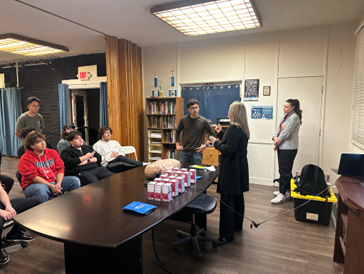
Over the last two years, the Overdose Prevention Committee (OPC) Executive Board at California Health Sciences University College of Osteopathic Medicine (CHSU-COM) has been working alongside Fresno State’s Student Health Center to increase campus members’ opioid overdose response preparedness during Fresno State’s monthly “Wellness Wednesday’s” events held at the student center.
This year, OPC wanted to go a step further in arming campus members to combat the opioid crisis through sharing their resources and knowledge of how to manage an opioid overdose with a more targeted audience. Recognizing the influence and interconnectedness of Fresno State’s Greek Life community, OPC launched an initiative to directly bring structured overdose response training into fraternity and sorority houses.
This population is particularly vulnerable to the harms of opioids and other substances, as young adults aged 18–25 have among the highest rates of substance use, and college social environments increase the risk of exposure to substances that may be unknowingly contaminated with fentanyl. The Greek Life population at Fresno State represents roughly 8-10% (1400 students) of the total student body, with a multitude of connections outside of their own communities. By targeting this group, OPC aimed to decrease stigma surrounding overdose prevention strategies and better equip the community with the confidence to respond an opioid overdose.
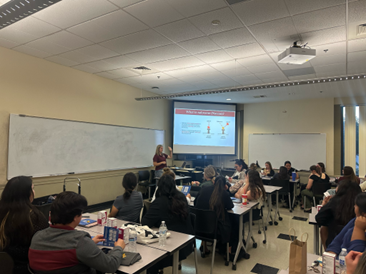
This year OPC members traveled to several fraternity and sorority houses to deliver their didactic session which covers the science behind an opioid overdose, how to properly identify an opioid overdose, and the steps to take following a positive or negative response to naloxone administration. After the brief didactic, OPC members provided attendees one-on-one instruction on how to respond to an opioid overdose, ensuring participants knew the signs and symptoms of an opioid overdose and how to administer intranasal naloxone safely and effectively. Participants were provided with free fentanyl testing strips, and intranasal naloxone to keep on them and at their chapter houses. Through this initiative, spearheaded by OPC’s External Education Sub Chair, nearly 100 fraternity and sorority members across three chapters were trained to recognize the signs/symptoms of an opioid overdose and properly administer intranasal naloxone. Alongside the training, attendees engaged in open discussions with medical students about harm reduction and available resources.
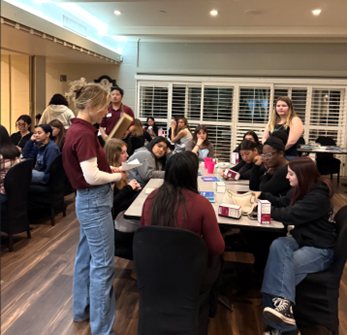
What stood out most was not just the information, but attendees’ reactions. Across chapters, students were engaged, asked questions, and visibly struck by the realities of the data presented. Many expressed genuine surprise to learn how common opioid overdoses are, even among people who may not consider themselves “at risk.” These sessions provided a constructive space for medical students and undergraduates to connect, learn, and grow together. The productive conversations combined with simulating overdose scenarios, practicing naloxone administration, and reinforcing key warning signs, turned passive learning into real preparedness.
National data indicate that approximately 40–50% of fatal opioid overdoses occur in the presence of a bystander, likely due to a lack of knowledge and confidence in opioid overdose response. By equipping individuals with practical skills and resources, OPC aims to transform all bystanders into responders capable of saving lives, especially in tight-knit communities such as Greek Life, where stigma may prevent normalization of carrying naloxone. OPC plans to sustain and expand this intervention in the coming years to additional Greek Life chapters and campus communities. The committee’s work this year is a reminder that prevention doesn’t only take place in clinics, but in conversations, shared spaces, and moments where awareness turns into action.