From Classroom to Community, Pre-SOMA Students Join OPC Harm Reduction Efforts at Wellness Wednesday Table
May 13, 2026
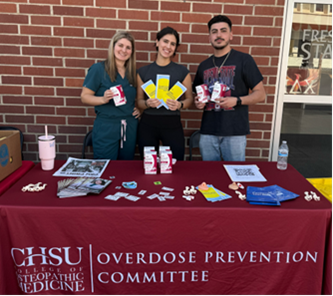
Photo Caption: Abigail Grigoryan (OMS-II & External Education Sub-Chair), Soha Said (OMS-III), & Rojeh Farah (pre-SOMA student) tabling at the February Wellness Wednesday event
Written by Abigail Grigoryan, OPC External Education Sub-Chair & OMS-II
Over the past two years, the Overdose Prevention Committee (OPC) at California Health Sciences University College of Osteopathic Medicine (CHSU-COM) has partnered with Fresno State’s Health Center to bring vital harm reduction resources directly to Fresno State campus members. One key avenue has been monthly tabling at Fresno State’s student health fair, where OPC members connect with students, faculty, and campus visitors.
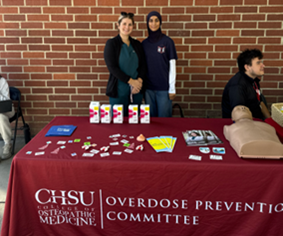
Held weekly outside the centrally located Bulldog Testing Center, ‘Wellness Wednesday’ is Fresno State Student Health Center’s signature outreach event. The gathering brings together both campus and community organizations to connect with students and promote health topics such as nutrition, self-care, and long-term wellness. Through its participation, OPC brings critical attention to harm reduction, while training campus members to recognize and respond to opioid overdoses.
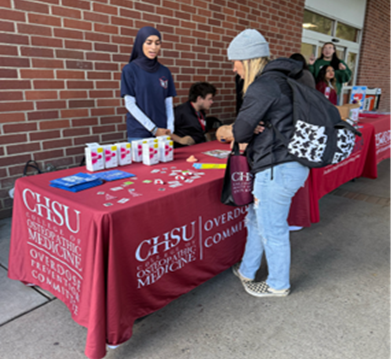
Fresno State has already made significant progress by introducing naloxone (Narcan) vending machines, increasing free and convenient access to life-saving resources. However, access alone is not enough—awareness and understanding must follow. At its core, harm reduction relies on education and destigmatization, which is where OPC steps in.
OPC has always operated on a “train the trainer” model, showcasing that one of the best ways to learn is to teach. This year, OPC put this principle into action by launching a program that allows pre-Student Osteopathic Medical Association (SOMA) students to table alongside the OPC External Education Sub-Chair. Prior to being allowed to participate, approximately 30 interested pre-SOMA members and current Fresno State undergrads attended a one-hour training session at CHSU facilitated by the OPC Executive Board. Upon successful completion of the training, attendees were eligible to sign up for the monthly tabling sessions at Fresno State. By engaging pre-SOMA students in training their peers, the program empowers them to become agents of change early in their medical journey, while encouraging earlier involvement in community outreach. This joint effort between pre-SOMA and CHSU’s OPC board facilitates valuable mentorship opportunities between medical students and prospective applicants.
One of the most rewarding parts of connecting with the Fresno State community is hearing the personal stories and lived experiences shared through these interactions. Through these interactions, many individuals voice concern for loved ones who may be engaging in at-risk behaviors. These conversations also create opportunities to broaden awareness of other at-risk populations, including patients receiving treatment for chronic pain, children who may accidentally ingest opioids, and individuals vulnerable to unintentional overdose.
By engaging individuals on a personal level and meeting them where they are, these interactions foster a more judgement-free and productive learning environment. For this academic year, approximately 150 individuals were trained through this initiative, with each participant receiving intranasal naloxone, fentanyl testing strips, and informational resources.
A central pillar of OPC’s mission is to reduce the widespread stigma surrounding naloxone possession, which is still incredibly prevalent. Despite a clear interest in learning about naloxone, many students hesitated to take one home—even when offered free of charge—due to the fear of being labeled an ‘addict.’ This is where peer-to-peer conversations play a critical role in shifting perspectives. Naloxone is a resource meant to protect the community, and being trained to use it can save a life. Research shows that nearly half of opioid overdoses occur with a bystander present; an outcome OPC is working to change. By equipping students with the knowledge and confidence to respond in an opioid overdose situation, OPC is helping to create a safer, more prepared community. At its core, meaningful change happens through these one-on-one connections, one conversation at a time.